
Leg Swelling & Venous Ulcers
Swollen, heavy or aching legs and non-healing leg wounds, often caused by a problem in the leg veins.
- Heavy legs
- Venous ulcer
- Non-healing leg wound
Conditions we treat
Varicose veins are swollen, twisted veins, usually in the legs. Today, varicose vein treatment rarely means open surgery. Minimally invasive options such as laser therapy, radiofrequency ablation (RFA) and glue therapy treat the problem vein from the inside through a single small entry point. Our specialist will help you understand whether you need treatment, and which option suits you.
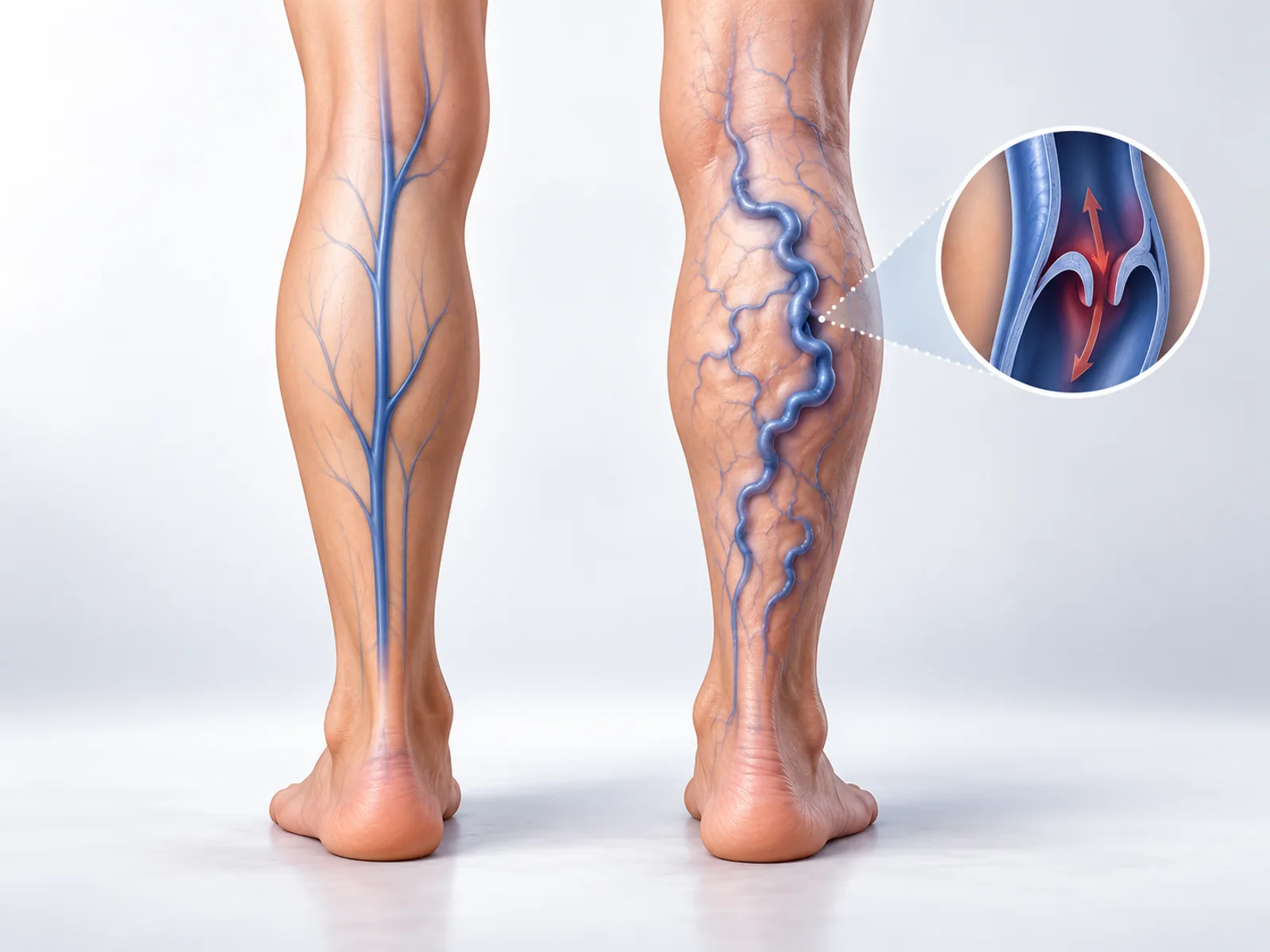
Veins carry blood back to the heart. Inside the leg veins are small one-way valves that stop blood from flowing backwards when you stand. When these valves weaken, blood pools in the vein. Over time the vein stretches, bulges and becomes twisted. Doctors call this venous reflux or chronic venous insufficiency.
Spider veins are smaller, fine red or purple veins close to the skin. They are usually harmless but can sometimes be a sign of a vein problem underneath.
Varicose veins are common. They run in families and are more likely with long hours of standing, pregnancy, increasing age and excess weight. For some people they are mainly a cosmetic concern. For others they cause heavy or aching legs, swelling, skin changes and, if left untreated for years, a venous ulcer near the ankle.
Consider booking a consultation if:
Every assessment starts with listening. We take the time to understand the full picture before suggesting anything.
Consultation
You sit down with the specialist and talk through your symptoms, your concerns and what you would like to achieve.
Your history
We ask about your health, past illnesses, medicines, family history and daily routine, as these often explain the problem.
Examination
A gentle, careful examination of the affected area, done in privacy.
Review of your reports
We go through any previous scans, test results and prescriptions you bring, so nothing is repeated without need.
Tests, only if needed
If more information would help, your specialist will explain which test is advised and why.
For varicose veins, your specialist may advise a Doppler ultrasound scan. It shows how blood flows in the leg veins and which valves are leaking, and it helps decide whether laser therapy, radiofrequency ablation (RFA), glue therapy or sclerotherapy would suit your veins. It is a simple scan that uses no radiation.
Treatment depends on the cause and how much it affects your life. Your specialist will explain each suitable option simply, including its benefits and risks, so you can decide together.
A thin laser fibre is placed inside the problem vein, and gentle heat closes the vein from the inside. It is done under ultrasound guidance through a single small entry point, usually under local anaesthetic. Blood then flows through healthy veins instead.
A thin catheter uses radiofrequency energy (controlled heat) to close the problem vein from the inside. It is done under ultrasound guidance through a single small entry point, usually under local anaesthetic.
A small amount of medical adhesive is placed inside the vein to seal it shut, without using heat. It is done under ultrasound guidance through a single small entry point, usually under local anaesthetic.
A medicine is injected into the vein so that it seals shut and fades over the following weeks. It is mainly used for smaller and spider veins; a foam form can also be used for some larger veins.
Graduated compression stockings, regular walking, leg elevation and weight control can ease symptoms, on their own or alongside treatment. For mild veins, this may be all that is needed.
Your specialist will explain which option suits your veins after an assessment.
If a procedure is recommended, your specialist will explain it and arrange it at a hospital, and you will continue your follow-up here at Vessels Clinic.
Not always. They can cause aching, swelling and skin changes, and over time can lead to a venous ulcer. A consultation helps decide whether treatment is needed or whether simple measures are enough.
All three close the problem vein from the inside, under ultrasound guidance through a single small entry point, usually under local anaesthetic. Laser therapy uses gentle heat from a thin laser fibre, radiofrequency ablation (RFA) uses controlled heat from radiofrequency energy, and glue therapy seals the vein with a small amount of medical adhesive, without heat.
It depends on the size and position of the problem veins, your symptoms and your general health. Your specialist will explain which option suits your veins after an assessment. Some people need a combination, for example laser therapy or RFA for the main vein and sclerotherapy for smaller branches.
Sclerotherapy is mainly used for smaller and spider veins. A foam form can also be used for some larger veins, either on its own or alongside other treatments.
No. The leg has many veins. Once a faulty vein is closed, blood returns to the heart through the healthy deeper veins.
The treated vein usually stays closed, but new varicose veins can develop over the years because the tendency runs in families. Walking, weight control and regular follow-up help.
Explore
Swollen, heavy or aching legs and non-healing leg wounds, often caused by a problem in the leg veins.
Leg pain while walking and poor blood circulation in the legs caused by narrowed arteries, with options including angioplasty and stenting.
Circulation problems, numbness and foot wounds in people with diabetes, assessed early to protect the foot.
Message us on WhatsApp or call the clinic to book an unhurried consultation with the specialist.